Scaphism: The Grisly Ancient Punishment Known as "The Boats"
Learn about Scaphism, the ancient Persian execution known as “The Boats,” described by Plutarch. Explore its history, method, and debated truth.

Suggested:
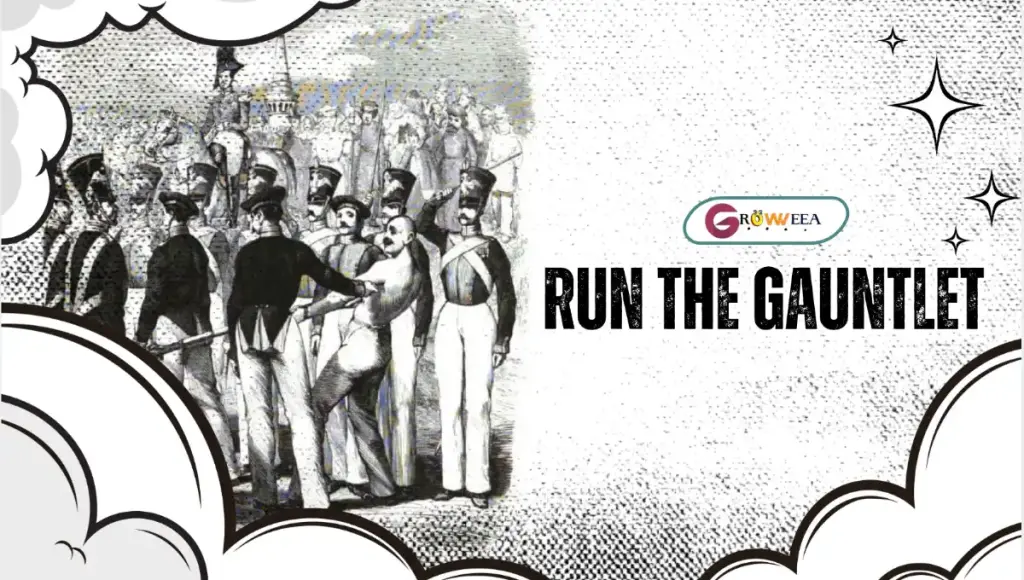
Discover the origin of “run the gauntlet,” a phrase rooted in brutal military punishment during the Thirty Years’ War, and how its meaning evolved today.
We have all heard the expression “Run the Gauntlet” thrown around in day-to-day vernacular, a difficult job interview, a ferocious news cycle, or a mob of critics. Yet this term has a black past of one of the most brutal modes of corporal punishment in the history of man. The meaning of running the gauntlet used to be a literal meaning of running between two lines of men who used to beat the criminal with sticks, clubs, ropes, or spear shafts as a punishment in cases of desertion, stealing, or disobeying. It was not a survival and in many cases, the death came as a result of the brutal strikes.
It originated as Swedish gatlopp (literally, street run), which made its way to English as a result of the gruesome thirty-year war (1618-1648) when mercenaries recruited by the English armies introduced it on European battlefields. It represents today a symbol of survival in a storm of aggression, although its history brings to light a dark side of military discipline.
Table of contents [Show]
The tradition has existed centuries back, and the running the gauntlet was crystallized during the 16th-17th century Europe. The use of gatlopp gained popularity among Swedish armies during the 30 Years war where the condemned were required to run about at a speed ranging between 100 and 300 meters between their peers holding knotted ropes or batons. The penalty was meant to be humiliating and painful and not necessarily to kill but rather to break, which was a lesson to runners.
It was perfected in Spiessgericht (pike judgment) by German Landsknecht mercenaries around the 1500s. Criminals made their way between the lines carrying spear shafts (or cudgels), even with a blindfold. Siegfried Fiedler notes that this tribunal of the great majority judged its peers, this tribunal of one group judged another group, and this ensured the group loyalty by mutual cruelty. There were also ancient precedents: Greek xylokopia (cudgel punishment) and Roman fustuarium (club beating) were reminiscent of the shape.
It was introduced to the outside world by the 17th-century English soldiers, and was anglicised to become gauntlet. Sea forms were developed-Naval crewmen could be heard running between shipmen swinging ropes or cats-o-nine-tails.
It was institutionalized in Prussian armies which were commanded by Frederick the Great (1700s) towards deserters. Runners were subjected to 1000+ blows in various runs, and the survival rate was low. It was required in Sweden up to 1851 and civilian adaptations continued to exist in Germany/Austria through the 1800s. Russia used bitalo (lines of similar beating) on serfs and soldiers.
It was dramatically modified by British Royal Navy. Crew sympathy saved seaman Francis Lanyon of HMS Royal George in 1760, crews were required to make more than three runs on gauntlets because he had exceeded his leave, according to logs. In 1806, admiralty abolished it when there was a call to reform. Dutch settlers in New Amsterdam in court martials referred to a soldier of New Amsterdam as Gantloppe.
Army/Navy | Period | Weapons Used | Typical Length | Notes |
|---|---|---|---|---|
Swedish Army | 1600s-1851 | Knotted ropes, batons | 100-300m | Gatlopp origin |
Landsknechts | 1500s | Spears, cudgels | Regiment length | Spiessgericht |
Prussian Army | 1700s | Sticks (1,000+ blows) | Multiple runs | Desertion focus |
Royal Navy | 1600s-1806 | Ropes, cat-o'-nine-tails | Ship deck length | Abolished 1806 |
Russian Army | 1700s-1800s | Whips, sticks | Variable | Bitalo variant |
Imagine this, a guilty soldier, at times unclothed to the waist, sprints bare, between fixed columns of 50-200 men. Every blow falls upon him as he goes-at ribs, back, legs. The speed did not take narrow pity, slow men who ran. Several repetitions increased the horror, a number of people died due to internal bleeding, broken bones, or infection. It was rare that women were the target of it, but naval/civilian adaptations were sometimes directed at women.
Physical pain was enhanced with psychological terror, whereby punishers were friends, and they became enemies. Escape meant execution. The post-run medical help was little, survivors were scarred throughout their lives.
In 2010s: A repugnant TikTok/YouTube trend was a product of running the gauntlet. The teens recorded videos of friends running lines of their friends throwing objects, such as eggs, paint, feces, in pranks. Daily Beast revealed instances that led to injury/humiliation, which resulted in bans of the platform. These mimicry stunts, as opposed to historical lethality, are focused on virality, rather than actual punishment, which attracts the police.
A nod to the rookie hazing drills used by Buffalo Bills NFL (pads no strikes) is Running the Gauntlet.
It is forever documented in literature: Horatio Hornblower novels draw pictures of naval gauntlets; Aubrey-Maturin series by Patrick O'Brian describes atrocities. It is mentioned in such films as Master and Commander. Sports steal in metaphor- NFL rookies are run through the pro-veteran gauntlets.
Music nods: Metallica's "Disposable Heroes" evokes military brutality. Gaming: Assassin's Creed features variants.
Cultural Reference | Medium | Context |
|---|---|---|
Horatio Hornblower | Books/TV | Naval punishment scenes |
Master and Commander | Film | Historical accuracy |
Assassin's Creed | Video Game | Mercenary discipline |
NFL Rookies | Sports | Hazing tradition |
Running the gauntlet transformed from 16th-century death march to 21st-century expression of endurance. Swedish gatlopp, which Landsknechts and navies made popular, and which was abolished as an abomination, lives to tell us of the dangers of groupthink. Watching a movie next time you run the gauntlet at work or in cyberspace, remember that the soldiers did it literally, hitting each other with hits that would have killed them. Scars of history cast their mark upon language, and knowledge of them makes it rich.

Learn about Scaphism, the ancient Persian execution known as “The Boats,” described by Plutarch. Explore its history, method, and debated truth.
The El Reno tornado of May 31, 2013, was the widest ever recorded in the U.S., reaching 2.6 miles and extreme wind speeds, leaving lasting impact on meteorology.
Mother’s Day UK 2025 falls on March 30 in the United Kingdom. Know the date, meaning, gift ideas, and unique ways to celebrate Mum.